

Between work, family, and everyday responsibilities, hair loss feels easy to ignore. Yet subtle changes, adjusting hairstyles, avoiding close-up photos, or feeling hesitant in public signal something deeper. Hair loss doesn’t just change appearance; it quietly affects confidence, self-image, and emotional comfort.
At Elation Hair & Skin Clinic, patients often share that hair loss affects their emotions long before it becomes visible to others.
This blog explains why hair loss feels so heavy emotionally, how it changes daily life, and how modern hair transplant solutions can help restore both hair and confidence.
Why does hair loss affect emotions more than people expect?
“I know many people lose hair, but why does it bother me so much?”
The answer to your doubt: Hair is closely connected to identity. It frames the face, influences how young or confident someone looks, and plays a role in first impressions. When hair begins thinning, people often notice it themselves long before anyone else does.
Emotionally, hair loss can lead to:
- Feeling less attractive or confident
- Fear of looking older than one feels
- Constant self-comparison with the past
These reactions are known as the emotional effects of hair loss. They don’t appear suddenly. They build slowly, often ignored at first, until confidence starts slipping quietly.
How does hair loss slowly change daily behaviour and self-confidence?
Hair loss doesn’t usually stop people from living their lives. Instead, it subtly changes behaviour. People begin adjusting how they stand, how they style their hair, or how comfortable they feel in public.
Common behavioural changes include:
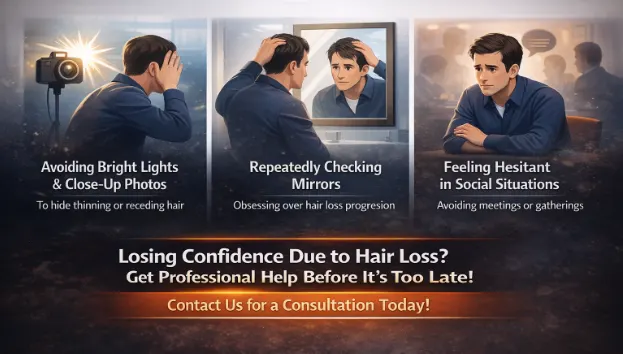
This constant awareness creates mental fatigue. Over time, this becomes part of the psychological impact of baldness, where confidence and ease slowly decline even if daily routines remain the same.
Why do many men and women delay seeking help for hair loss?
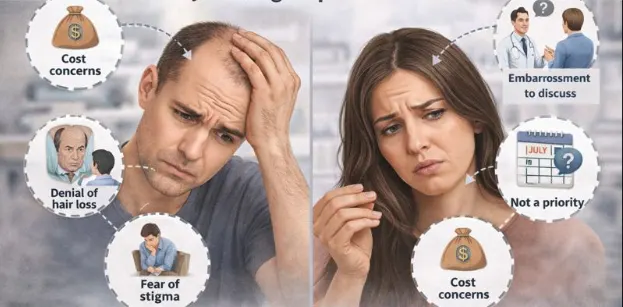
Despite emotional discomfort, many people delay seeking help. This usually happens due to fear, confusion, or misinformation.
Common reasons include
- Belief that hair loss is unavoidable
- Fear of surgery or pain
- Myths about unnatural results
- Concern about being judged
Men looking for a male pattern baldness solution often wait until hair loss becomes advanced, not realizing that early consultation does not mean immediate surgery; it simply means understanding options.
Can a hair transplant really restore confidence, not just hair?
A modern hair transplant focuses on restoring balance and natural appearance, not creating dramatic change. The goal is to help hair blend naturally with facial features and age.
Patients often experience:
- Reduced self-consciousness
- Better comfort in social situations
- Less anxiety about appearance
This emotional recovery is commonly described as confidence after a hair transplant. Many people say they stop thinking about their hair constantly and start feeling present again.
At Elation Hair & Skin Clinic, a hair transplant clinic in Kolkata, treatment planning is done carefully, keeping emotional readiness and realistic expectations in mind.
What exactly happens during the hair transplant journey?
A hair transplant journey begins with a detailed consultation, followed by carefully transferring healthy hair follicles to thinning areas. Over the next few months, the transplanted hair settles, grows naturally, and gradually restores hair density and confidence.
Before the procedure
- Detailed scalp and hair loss evaluation
- Hairline and density planning
- Donor area assessment
During the procedure
- Local anaesthesia is used
- Hair follicles are extracted and implanted carefully
- Most patients remain comfortable
After the procedure
- Mild swelling or redness for a few days
- Temporary shedding of transplanted hair
- Gradual regrowth over months
Hair restoration is a process, not an overnight change. Knowing this helps patients stay calm and confident.
Does everyone with hair loss need surgery?
No. Hair transplant is suitable only when certain conditions are met.
Ideal candidates usually have:
- Stable hair loss patterns
- Healthy donor hair
- Realistic expectations
For those exploring hair thinning treatment for men, doctors may first suggest medical treatment before surgery. A proper consultation provides clarity and often reduces anxiety, even if surgery is not immediately required.
Which hair transplant techniques are commonly used today?
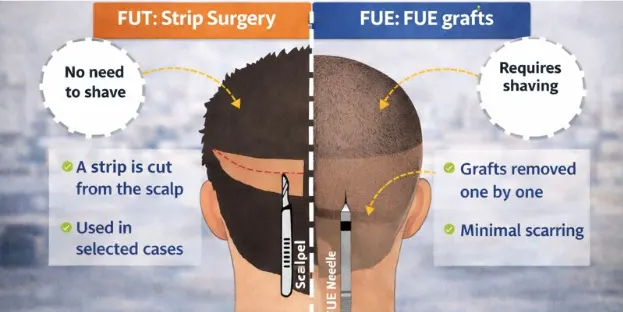
FUE (Follicular Unit Extraction)
- Individual hair follicles are extracted
- Minimal scarring
- Faster recovery
FUT (Strip Method)
This method includes:
- A strip of scalp is removed
- Suitable for selected cases
- Requires careful planning
The choice of technique depends on scalp condition, donor hair, and long-term planning—not trends.
How does life feel emotionally before and after a hair transplant?
Emotional Comparison
| Aspect | Before Hair Transplant | After Hair Transplant |
| Confidence | Low or unstable | Improved |
| Social comfort | Hesitant | Relaxed |
| Self-image | Self-critical | Balanced |
| Mental state | Anxious | Calm |
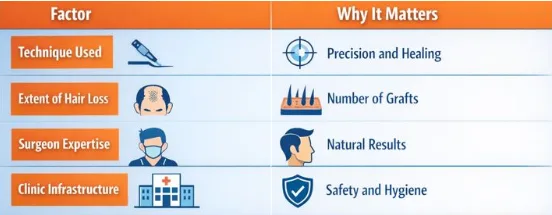
Understanding the Factors Affecting Hair Transplant Cost
Psychological Dimensions of Hair Transplantation: A Narrative Review of Current Evidence
Clinical research shows that hair loss affects more than physical appearance, with a real impact on mental and emotional well-being. Many individuals experience increased stress, anxiety, and reduced self-confidence, even if they appear fine outwardly. This psychological burden often remains unnoticed while people continue their daily routines. Over time, it can influence social interactions, professional confidence, and overall quality of life.
Psychological Findings from Clinical Studies
Research evaluating patients undergoing hair transplantation has identified several consistent psychological patterns:
- Hair loss is associated with increased emotional distress, particularly in younger and middle-aged adults
- Feelings of premature ageing and loss of identity are commonly reported
- Social confidence and self-esteem often decline gradually rather than suddenly
- Anxiety and mild depressive symptoms may develop when hair loss progresses unchecked
Studies also emphasise the importance of psychological screening before surgical intervention. Tools such as structured mental health questionnaires help identify individuals with unrealistic expectations or underlying emotional vulnerability.
Impact of Proper Screening and Expectation Management
Clinical evidence shows that patients who receive clear counselling and expectation management before a hair transplant tend to experience better emotional outcomes after the procedure. When hair restoration is planned alongside psychological readiness, results extend beyond cosmetic improvement.
Post-transplant outcomes commonly include:
- Improved self-esteem and body image
- Reduced anxiety related to appearance
- Better social comfort and confidence
- Enhanced emotional well-being
Conversely, inadequate psychological assessment or unrealistic expectations may lead to dissatisfaction, even if the surgical outcome is technically successful.
Why a Holistic Approach Matters
Modern hair restoration increasingly follows a multidisciplinary approach. Combining medical evaluation, surgical planning, and psychological understanding helps ensure both physical and emotional satisfaction. (Source)
Understanding Hair Loss and Its Emotional Impact
Hair loss is not just a cosmetic issue; it affects confidence, emotions, and daily comfort. Understanding why it happens and how modern hair transplant options work helps remove fear and confusion. With the right guidance, restoring hair can also restore self-assurance and peace of mind.
If hair loss is affecting how you feel, a conversation can help. Consult Elation Hair & Skin Clinic, a trusted hair transplant clinic in Kolkata, for guidance and personalised care.
📞 Call +91 9830085599 today to book your consultation.
People Also Ask (FAQs)
- Is a hair transplant painful?
Hair transplant is done under local anaesthesia, so pain during the procedure is minimal. Mild discomfort afterwards usually settles within a few days.
- How long does recovery take?
Most people resume daily activities within 3–7 days. Healing continues gradually over the next few weeks.
- Are hair transplant results permanent?
Yes, transplanted hair is usually permanent when proper care and follow-up are maintained.
- When will new hair start growing?
Hair growth generally begins around 3–4 months, with full results visible by 12 months.
- Is a hair transplant safe?
When performed by experienced professionals in a proper clinical setup, a hair transplant is considered safe.