
Our Skin Treatments
Your Path to Healthier Hair and Skin Starts Here
Give Your Skin a Fresh Start
Tattoo Removal Treatment: Fade Unwanted Ink, Restore Your Natural Skin
A tattoo that once held meaning may no longer reflect who you are today. Whether it is a faded design, an old name or a tattoo you simply wish to remove, unwanted ink does not have to remain a permanent reminder. Laser tattoo removal treatment works by breaking down tattoo pigment into smaller particles, which the body's immune system gradually clears away. With the right treatment approach, unwanted tattoos can gradually fade, helping your natural skin appearance return, although complete removal is not always possible.
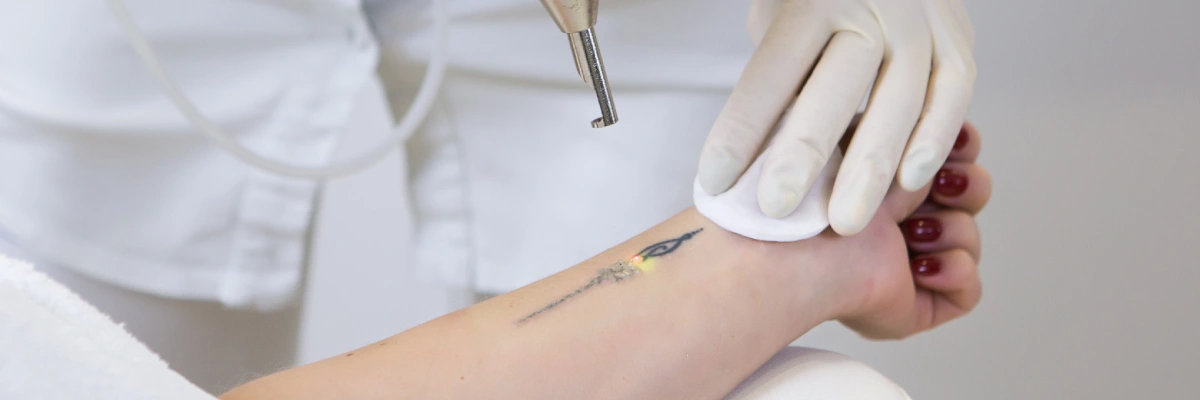
Your Tattoo Doesn’t Have to Leave a Permanent Mark
Why Choose Elation for Tattoo Removal Treatment in Kolkata?
At Elation Hair & Skin Clinic, we focus on understanding how your tattoo was created, how the pigment sits within your skin and what can realistically be achieved without overlooking skin safety.
- Professional tattoos, amateur designs and layered cover-ups can contain pigment at different depths. We consider ink density and layering when planning treatment.
- Laser treatment can sometimes cause temporary or persistent lightening or darkening of the skin. We consider your skin tone and pigmentation risk when selecting suitable treatment parameters.
- The laser breaks down pigment, but your body needs time to clear the fragmented particles. Our team understands the appropriate gaps between sessions and we allow fading to continue and the treated skin to recover.
- Certain pigments may resist treatment, while some cosmetic inks can darken after laser exposure. We discuss possible outcomes, limitations and the risk of residual marks before proceeding.
Do You Still Want That Ink?
Is Tattoo Removal Treatment Right for You?
A tattoo does not need to look damaged or poorly done for you to consider removing it. Sometimes the design is perfectly fine, but your preference has changed. Laser tattoo removal may be worth considering in these situations.
- Multiple layers of ink have made the original design appear heavy, crowded or difficult to recognise.
- Once-sharp lettering, thin lines or intricate patterns have blurred as pigment has gradually spread within the skin.
- Lightening an existing tattoo could give your tattoo artist greater flexibility when creating a new design.
- You want to remove a name, symbol, phrase or artwork for personal or professional reasons.
- You understand that tattoo removal is a multi-session process and that some ink, pigment changes or skin texture differences may remain.
Thinking of removing a tattoo rather than covering it again? Book a consultation at Elation Hair & Skin Clinic for a closer assessment of your tattoo, its pigments and the removal possibilities suited to your skin.


Know the Cost Before You Begin
Tattoo Removal Cost in Kolkata
The cost of tattoo removal at Elation Hair & Skin Clinic in Kolkata ranges from ₹3,000 to ₹10,000 per session, depending on the size and colour of the tattoo. The overall expense may vary based on ink density, tattoo depth, the complexity of the design and the number of sessions required to achieve the desired fading. Tattoo removal treatment is available at our Ultadanga, Gariahat and Minto Park clinics.
Leaving the Past Behind
Your Tattoo Removal Treatment Journey at Elation
Tattoo removal is not a one-day transformation. Laser energy works on the pigment trapped within your skin, while your body's natural clearance process continues long after each appointment. At Elation Hair & Skin Clinic, we follow a structured process that considers the characteristics of your tattoo, your skin's response and the time needed between sessions.
-
Step
Understanding What Lies Beneath the Ink
We begin by examining the tattoo and discussing whether it was professionally applied, retouched or covered with additional artwork. Previous removal attempts, existing scars and any changes in the tattooed skin are also considered before proceeding.
-
Step
Mapping Out the Removal Process
Some tattoos can be treated using a single laser wavelength, while multicoloured designs may require different wavelengths. We explain the proposed approach, possible limitations and how treatment progress will be reviewed over successive appointments.
-
Step
Getting the Tattooed Area Ready
The treatment area is cleaned, and appropriate protective eyewear is provided. A cooling method or topical anaesthetic may be used to improve comfort. We also check for recent tanning, irritation or broken skin that could affect treatment safety.
-
Step
Breaking Down the Unwanted Pigment
During the procedure, short pulses of laser energy pass through the skin and are absorbed by tattoo pigment. This causes the ink particles to fragment into smaller pieces. You may notice temporary whitening or frosting of the treated tattoo immediately after laser exposure.
-
Step
Letting Your Body Do Its Part
The laser does not physically extract ink from your skin. Over the following weeks, immune cells gradually process and clear some of the fragmented pigment. The treated area needs adequate healing time before another session can be considered.
-
Step
Reviewing the Fading Before Moving Forward
At subsequent visits, we compare the remaining pigment with earlier observations. Areas that have faded unevenly or contain resistant colours may need a revised approach. Additional sessions are planned according to visible progress and skin recovery.
Importance of Proper Care
Tattoo Removal Recovery Timeline & Aftercare Support
After laser tattoo removal, your skin may react much as it does after a superficial skin injury. Temporary whitening, redness, swelling or small blisters can occur as the treated area begins to heal. Following the recommended aftercare helps reduce avoidable irritation and complications.
- The First 24–48 Hours: The tattooed area may feel warm, tender or slightly swollen. Apply a cool compress as directed, without placing ice directly against your skin. Follow any dressing instructions provided.
- Keep the Area Clean, Not Scrubbed: Gently cleanse the treated skin as instructed and pat it dry. Avoid vigorous washing, abrasive cloths and unnecessary touching.
- Leave Blisters and Scabs Undisturbed: Small blisters, crusting or scabs may develop after treatment. Do not pop, peel or pick them, as this can increase the risk of infection, scarring and pigmentation changes.
- Pause Activities That Irritate the Area: Swimming, soaking in bathtubs, saunas and intense workouts may need to be avoided until the skin has healed. Loose clothing can help minimise rubbing against the treated tattoo.
- Keep UV Rays Away from Healing Skin: Avoid direct sunlight on the treatment site. Once the skin has healed sufficiently, use broad-spectrum SPF 30 or higher sunscreen on exposed areas to help reduce pigmentation changes.
- Watch for Signs That Need Attention: Increasing redness, worsening pain, spreading warmth, pus or fever should not be ignored. Contact your treating clinician if these symptoms develop.
- Do Not Rush the Next Appointment: Tattoo pigment continues to fade for several weeks as your body clears fragmented ink. Sessions are commonly spaced at least six to eight weeks apart, sometimes longer, depending on healing and treatment response.
Beyond the Ink
Understanding the Safety and Risks of Tattoo Removal Treatment
| Possible Concerns | How They Are Managed |
|---|---|
| Temporary whitening of the tattooed area | Explaining the immediate frosting effect caused by laser interaction with ink and monitoring how the skin settles |
| Heat sensation during treatment | Using appropriate cooling methods and adjusting treatment settings according to skin tolerance |
| Dark ink remaining after multiple sessions | Reviewing pigment concentration and previous fading patterns to determine whether further sessions may help |
| Coloured ink responding slowly | Selecting suitable laser wavelengths where available and explaining that some colours are more resistant to removal |
| Skin sensitivity between appointments | Allowing adequate recovery time and recommending gentle care until the treated area heals |
| Changes in natural skin colour | Considering the risk of lighter or darker patches, especially in pigmentation-prone skin, and avoiding excessive laser exposure |
Experiences Shared by Our Patients
What Patients Say About Elation
Explore patient feedback about treatment experiences at our Ultadanga, Gariahat and Minto Park centres.
Answers to Your Concerns
Frequently Asked Questions
Curious about the procedure, recovery time or results you can expect? Explore these FAQs to clear your doubts and take the next step with confidence.
Can coloured tattoos be removed with laser treatment?
Yes, many coloured tattoos can be treated using suitable laser wavelengths. However, green, yellow, light blue and certain other pigments may be more difficult to remove than black ink.
Can you remove only part of a tattoo?
Yes, selective tattoo removal may be possible for specific letters, names, symbols or sections of a larger design. The feasibility depends on the precision required and the spacing between different parts of the tattoo.
Can you get a new tattoo over an area treated with laser?
Yes, once the skin has healed fully and the treated area has stabilised, you may be able to get a new tattoo. Your clinician and tattoo artist can help determine an appropriate waiting period.
Why does your tattoo sometimes look darker after laser treatment?
Certain pigments, especially those used in cosmetic tattoos and inks containing iron oxides or titanium dioxide, may darken when exposed to laser energy. This possibility should be assessed before treatment.
Can an old tattoo be easier to remove than a new tattoo?
Older tattoos may have already lost some pigment through natural fading, making them easier to treat in certain cases. However, ink composition, depth and density are often more important than tattoo age alone.