
A few strands falling out are normal. A handful every day? That deserves attention.
When hair thinning starts showing on your scalp, quick fixes may not be enough. It could mean your hair follicles are becoming weak and need targeted support. PRP gives weak follicles the support they need by using growth-factor-rich plasma from your own blood.
From weak roots to reduced density, this blog explains how PRP may support hair growth and when it can fit into a treatment plan.
What Is PRP Hair Treatment?
PRP stands for platelet-rich plasma. It is prepared from a small amount of the patient’s own blood. The blood is processed to separate plasma, which has a higher platelet concentration. These platelets contain growth factors that may support healing, repair, and follicle activity.
Why PRP Is Used for Hair Fall
PRP is mainly used when hair follicles are weak but not completely inactive. PRP for thinning hair is not meant to work like a quick-fix oil or overnight serum. Its role is to support existing follicles so they can function better.
It may be helpful for :
- Early thinning,
- Reduced volume,
- Weak roots and
- Pattern hair loss.
How Does PRP Help Stimulate Hair Growth?
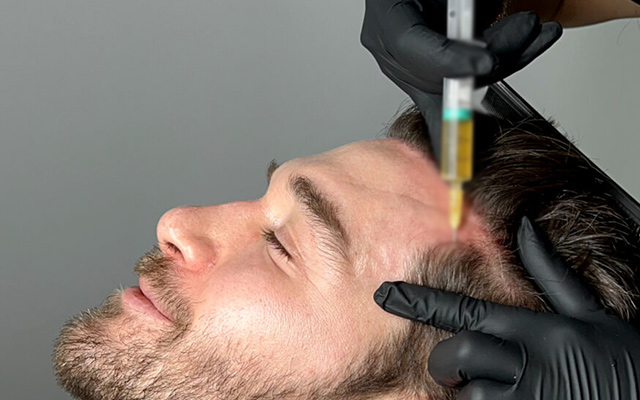
Hair growth starts at the root, not on the surface. PRP helps by using growth-factor-rich plasma from your own blood. When injected into thinning areas of the scalp, it may support weak follicles, improve follicle activity, and help enhance hair density gradually.
Role of Growth Factors in Hair Regrowth
Hair growth depends on the health of the follicle. When follicles become weak, the hair strands may become thinner, shorter, and more fragile. PRP contains growth factors that may help improve the scalp environment around these weak follicles.
When injected into the scalp, PRP may support repair signals, local blood supply, and follicle activity. This is why it is often discussed as a non-surgical hair regrowth treatment for people with early-stage thinning.
How PRP Supports Weak Hair Follicles
This treatment does not create brand-new follicles, and that distinction matters. If a follicle is already inactive, the benefit may be limited. But when follicles are weak, shrinking, or producing thinner strands, platelet-rich plasma may help stimulate hair follicles naturally.
That is why it is more suitable for people who still have hair in the thinning area but notice reduced density, weaker strands, or excessive shedding.
Can PRP Improve Hair Density and Thickness?
In suitable patients, PRP may help improve hair density and hair thickness gradually. Some patients may first notice reduced shedding. Later, the hair may start looking stronger, fuller, or healthier.
However, results are not the same for everyone. Age, genetics, scalp health, nutritional status, medical history, and consistency all play a role. PRP should be seen as a planned treatment approach, not a one-session shortcut.
At Elation Hair & Skin Clinic in Kolkata, PRP hair loss treatment starts with a detailed scalp check, not guesswork. The treatment is planned only after understanding your hair fall pattern, follicle strength, and growth potential.
Who Is the Right Candidate for PRP?

PRP may be considered when hair follicles are still active and responsive.
People who may benefit from PRP include:
- Those noticing early hair thinning
- People with weak but active follicles
- Men or women with pattern hair loss
- Patients with reduced hair density
- People looking for a non-surgical option
Here is a simple way to understand where PRP may help better:
| Hair concern | PRP suitability | Why it matters |
| Early hair thinning | Often suitable | Follicles may still be active |
| Pattern hair loss | May be suitable | Common in androgenetic alopecia |
| Weak hair roots | May help | PRP may support follicle strength |
| Sudden heavy hair fall | Depends on cause | Diagnosis is needed first |
| Complete bald patches | Limited role | Follicles may be inactive |
What Happens During a PRP Hair Treatment Session?
A PRP hair treatment session is a planned process, not a random scalp procedure.
It includes scalp assessment, blood collection, PRP preparation, and targeted injections into areas that need follicle support.
Here is the detailed explanation:
1. Scalp Assessment and Hair Fall Evaluation
Before starting PRP, the scalp should be checked properly. The doctor evaluates the hair fall pattern, thinning stage, scalp condition, and possible triggers. This step helps decide whether PRP is suitable or whether another treatment should be started first.
2. Blood Collection and PRP Preparation
A small amount of blood is collected from the patient. It is then processed to separate platelet-rich plasma from other blood components. The prepared PRP is then used for targeted scalp injections.
3. PRP Injection Into the Scalp
The PRP is injected into thinning areas of the scalp. These are usually the areas where follicles are weak but still active. The process may cause mild discomfort, but it is generally manageable.
The usual steps include:
- Scalp evaluation
- Blood collection
- PRP separation
- Scalp injections
- Aftercare guidance
4. Aftercare After PRP Treatment
After the session, mild redness, tenderness, swelling, or scalp sensitivity may happen for a short time. The doctor may share simple aftercare instructions depending on the patient’s scalp condition and treatment plan.
When Can You Expect Results From PRP?
PRP results take time because hair growth follows a natural cycle. It does not work overnight, and visible changes usually appear gradually. In the first few weeks, some people may notice reduced hair fall before seeing new thickness or density. This can be an early sign that the follicles are responding to the treatment.
The timeline may differ from person to person because every scalp reacts differently. Factors like hair thinning stage, follicle activity, scalp health, age, nutrition, genetics, and treatment consistency can affect the result.
You may notice changes in stages:
- Reduced hair shedding may be seen first
- Hair may start feeling stronger gradually
- Density and thickness may improve over a few months
- Multiple sessions may be needed for better support
- Maintenance sessions may be advised in some cases
Before You Book PRP, Know These Safety Points
| Safety check | What it means for you |
| Uses your own blood | PRP is prepared from your own blood, making it different from external serums or synthetic treatments. |
| Done under clinical care | It should be prepared and injected in a proper clinical setting under professional supervision. |
| Mild reactions may happen | Temporary redness, tenderness, swelling, or scalp sensitivity may occur after the session. |
| Technique makes a difference | Proper plasma preparation and accurate injection placement are important for safety and better outcomes. |
| Suitability comes first | PRP may not work for every type of hair loss, so scalp evaluation is needed before treatment. |
| Results take patience | PRP supports weak follicles gradually and should not be expected to work like an instant hair-growth fix. |
Can PRP Help Weak Follicles Grow Better?
PRP may help stimulate hair growth in suitable candidates by supporting weak follicles, improving scalp health, and helping with hair density. It is not a magic cure for every type of hair loss, but it can be a useful option for early thinning, weak roots, and pattern hair loss.
People looking for PRP hair loss treatment can consult Elation Hair & Skin Clinic in Kolkata for proper scalp evaluation and personalised treatment planning.
📞 Call +91 9830085599 today to book your consultation.
People Also Ask
1. Does PRP work for both men and women?
Yes, PRP may be considered for both men and women dealing with early hair thinning or pattern hair loss. Suitability depends on scalp condition, follicle activity, and the reason behind hair fall.
2. Can PRP stop hair fall completely?
PRP may help reduce excessive shedding in suitable cases, but it may not stop hair fall completely for everyone. The result depends on the cause of hair loss and how the follicles respond.
3. Is PRP painful for hair loss treatment?
PRP may cause mild discomfort during scalp injections, but it is usually manageable. Some patients may feel temporary tenderness or sensitivity after the session.
4. Can PRP be combined with other hair loss treatments?
Yes, PRP can sometimes be combined with medicines, lifestyle correction, or other doctor-recommended treatments. The combination depends on the diagnosis and hair fall stage.
5. What should be avoided after PRP hair treatment?
Patients may be advised to avoid harsh hair products, scalp massage, sweating, or chemical treatments for a short period. Aftercare instructions should always be followed as advised by the doctor.