
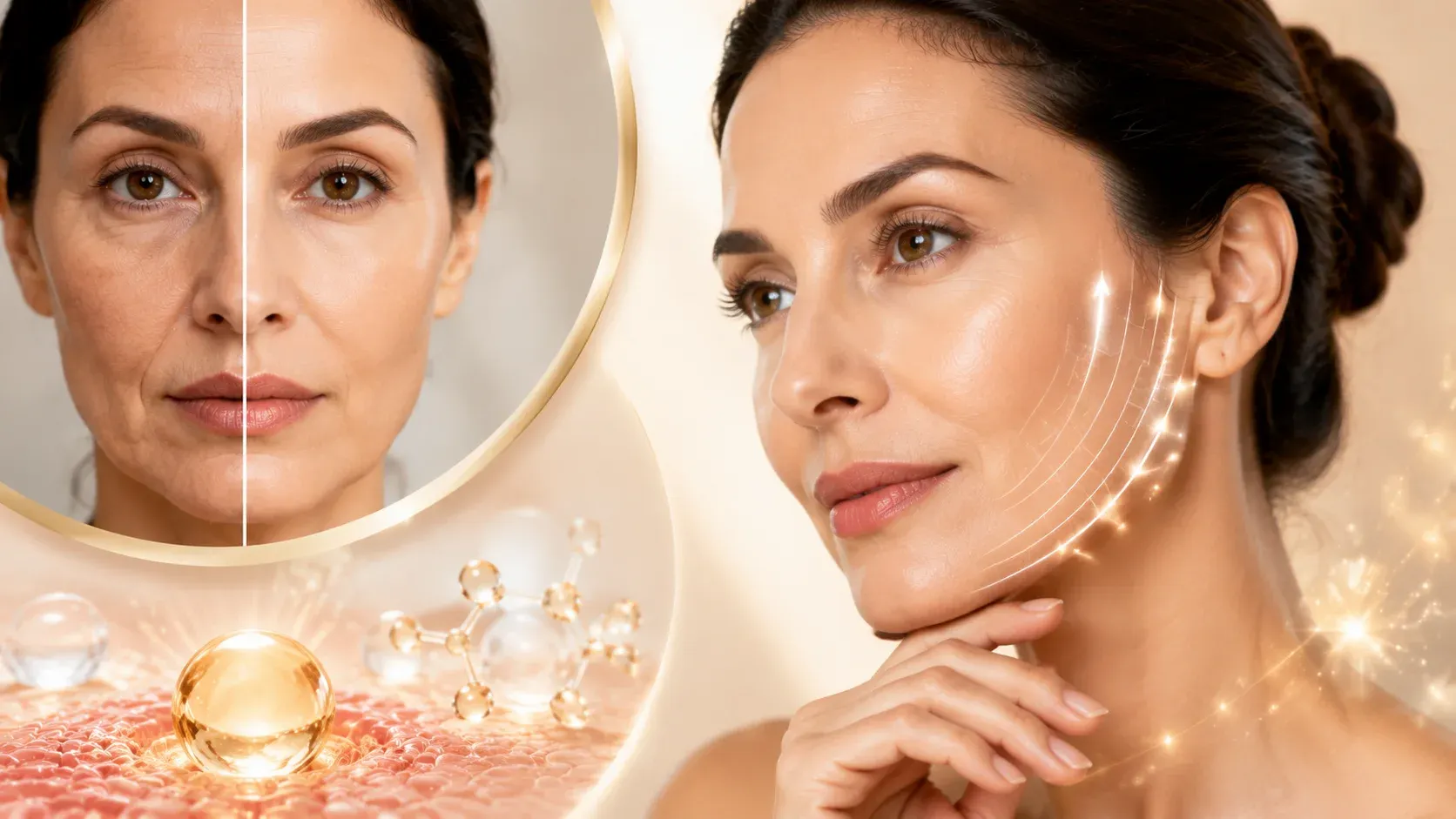
Years of applying expensive creams, serums, and skincare products can still leave you disappointed when your skin starts losing firmness. Fine lines may look reduced, but sagging skin, loose cheeks, and a less defined facial contour often need more than topical solutions.
A personalised skin-tightening treatment can address deeper signs of ageing by supporting collagen renewal and improving skin firmness. As skin changes over time, understanding what causes these changes matters before choosing the right approach. Modern aesthetic treatments now focus on restoring a youthful appearance while maintaining natural-looking results.
Why Sagging Skin Doesn’t Respond to Creams Anymore
Many people believe that using a powerful cream can reverse sagging, but the reality is different. Most skincare products work on the outermost layer of the skin. They may improve hydration, texture, and surface appearance, but they cannot deeply stimulate the structures responsible for skin firmness.
One of the major causes of sagging skin is the gradual breakdown of collagen and elastin fibres. These proteins provide strength, support, and flexibility to the skin. With ageing, their production naturally slows down, causing the skin to become thinner, softer, and less resilient.
Another important factor is the loss of skin elasticity. Younger skin can stretch and return to its original position easily. However, over time, reduced collagen production, environmental exposure, lifestyle habits, and hormonal changes affect the skin’s ability to bounce back.
Common factors that contribute to loose and sagging skin include:
- Natural ageing process
- Excessive sun exposure
- Stress and poor sleep patterns
- Smoking and unhealthy lifestyle habits
- Significant weight fluctuations
- Reduced collagen production
While a good skincare routine remains valuable, it often cannot provide the deeper lifting effect needed when structural skin changes occur.
What’s Actually Happening to Your Skin as You Age
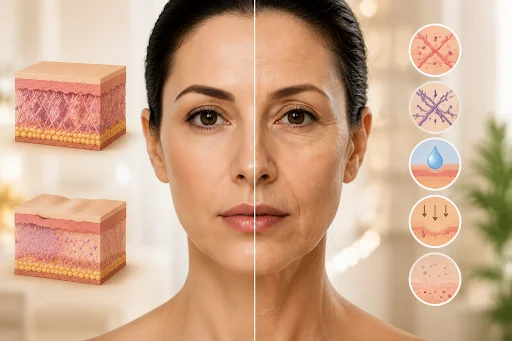
Ageing affects your skin in several ways beyond visible wrinkles. The process involves changes beneath the surface, where collagen, elastin, and natural moisture levels gradually decline.
Collagen loss and ageing skin are closely connected. Collagen acts like a support framework that keeps the skin firm and smooth. As collagen levels decrease, the skin starts appearing thinner and less lifted. This can result in hollow areas, drooping cheeks, and reduced facial definition.
Apart from collagen changes, ageing can also reduce the skin’s ability to retain moisture. This makes the skin appear dull, tired, and less radiant.
Some common signs of premature skin ageing include:
- Fine lines appearing earlier than expected
- Uneven skin texture
- Loss of facial volume
- Dull or tired-looking skin
- Mild sagging around the cheeks, jawline, or neck
- Reduced skin firmness
Factors such as pollution, UV exposure, stress, and poor lifestyle choices can speed up these changes. This is why some people notice ageing signs earlier, even when they follow regular skincare habits.
When Topical Products Reach Their Limit
Creams and serums are an important part of maintaining healthy skin, but their role has limitations. Ingredients such as retinol, peptides, and antioxidants can support skin quality, but they usually cannot reach deeper skin layers where collagen remodelling happens.
When sagging becomes more noticeable, simply changing products may not create the transformation you are expecting. At this stage, treatments that work beneath the skin surface can offer a more targeted approach.
The goal is not to change your appearance completely but to improve skin firmness, restore freshness, and create a more balanced facial contour.
What Actually Firms and Tightens Sagging Skin
Anti-Ageing Treatment — Going Beyond What Creams Can Do
Anti-ageing treatment focuses on advanced solutions designed to improve signs of ageing beyond what skincare products can achieve. These treatments work on deeper skin layers to encourage collagen production, improve firmness, and support natural skin renewal.
Unlike creams that mainly improve surface texture, professional skin firming procedures target concerns such as loose skin, reduced elasticity, and early facial ageing. The right treatment depends on your skin condition, ageing pattern, and desired outcome.
Modern approaches may include skin rejuvenation procedures that help tighten the skin without surgery. These options are designed to provide gradual, natural-looking improvements while maintaining your facial expressions.
HIFU, Thermage, or Skin Boosters — Which One Fits Your Skin?
Choosing between treatments depends on your skin concerns and the level of tightening required.
HIFU (High-Intensity Focused Ultrasound) uses focused ultrasound energy to stimulate deeper layers of the skin. It is commonly considered for improving mild to moderate sagging and enhancing facial firmness.
Thermage uses radiofrequency energy to heat deeper skin tissues and encourage collagen restructuring. It is often preferred for improving skin laxity and overall tightening.
When comparing HIFU vs Thermage for sagging skin, there is no single option that works best for everyone. HIFU may be suitable for targeted lifting, while Thermage can help with broader skin tightening concerns. A professional evaluation helps determine which approach matches your skin needs.
Skin boosters work differently by improving hydration, glow, and overall skin quality. They are often combined with other treatments as part of a complete rejuvenation plan.
Who Should Consider Non-Surgical Skin Tightening
Non-surgical skin tightening can be suitable for individuals noticing early signs of loose skin but who do not want surgical procedures.
You may consider skin firming procedures if you experience:
- Mild sagging around the cheeks or jawline
- Reduced facial firmness
- Early ageing changes
- Dull and tired-looking skin
- Loss of youthful skin texture
These treatments are designed for people looking for gradual improvements with minimal downtime. A customised approach ensures the procedure matches your skin condition and aesthetic goals.
What to Expect From a Facial Rejuvenation Plan

A facial rejuvenation plan is not only about reducing wrinkles. It focuses on improving overall skin quality, firmness, texture, and facial harmony.
During a consultation, your skin condition, ageing concerns, and expectations are carefully assessed. Based on this evaluation, a personalised combination of treatments may be suggested.
A complete rejuvenation approach may include:
- Skin tightening procedures
- Collagen-stimulating treatments
- Skin hydration therapies
- Lifestyle and skincare guidance
The aim is to achieve refreshed and natural-looking results rather than an artificial or over-treated appearance.
Why This Approach Works Where Creams Fall Short
Anti-ageing treatment works differently because it addresses the deeper causes of visible ageing rather than only improving the surface of the skin.
Advanced treatments focus on stimulating collagen, improving firmness, and restoring healthier-looking skin from within. This makes them more effective for concerns that creams and serums cannot fully correct.
Our experts understand that every person's skin ages differently. A detailed skin assessment helps us recommend treatments that match your specific concerns, whether it is early skin laxity, reduced elasticity, or visible sagging.
The right approach can help you achieve smoother, firmer, and more youthful-looking skin while keeping your natural features intact.
Book Your Skin Consultation
If creams and serums are no longer giving you the firmness you want, it may be time to explore advanced options. We offer personalised anti-ageing treatment in Kolkata to help improve skin tightness, texture, and overall facial appearance.
Book your consultation today to understand which skin-tightening approach suits your ageing concerns.
Frequently Asked Questions
1. At what age does skin start losing its natural elasticity?
Skin usually begins to lose its natural elasticity in the mid to late 20s as collagen and elastin production gradually slows down. However, visible changes like fine lines, reduced firmness, and mild sagging often become more noticeable after the age of 30. Factors such as sun exposure, stress, lifestyle habits, genetics, and skincare routine can influence how quickly these changes appear.
2. Can skin tightening treatments really replace what creams can't do?
Yes, skin tightening treatments can address concerns that creams and serums cannot fully correct. While topical products mainly work on the skin surface by improving hydration and texture, professional skin tightening procedures target deeper layers to stimulate collagen production and improve firmness. These treatments can help with loose skin, reduced elasticity, and early signs of ageing by working beneath the surface.
3. Is HIFU or Thermage better for sagging skin around the jawline?
Both HIFU and Thermage can help improve skin firmness, but they work differently. HIFU uses focused ultrasound energy to target deeper skin layers and is often preferred for lifting concerns like mild jawline sagging. Thermage uses radiofrequency energy to stimulate collagen remodelling and can improve overall skin tightening. A consultation helps determine which treatment suits your needs better.
4. How many sessions are needed before you notice firmer skin?
The number of sessions depends on the treatment type, skin condition, and individual ageing concerns. Some advanced skin tightening treatments may show gradual improvement after a single session, while others may require multiple sessions for optimal results. Since collagen regeneration takes time, improvements usually become more noticeable over the following weeks or months after treatment.
5. Are non-surgical anti-ageing treatments safe for sensitive skin?
Non-surgical anti-ageing treatments can be safe for sensitive skin when the procedure is selected after proper skin evaluation. A detailed consultation helps identify skin sensitivity, existing concerns, and the most suitable treatment approach. Using the right technology, settings, and aftercare plan can help minimise discomfort and support healthy skin rejuvenation.