
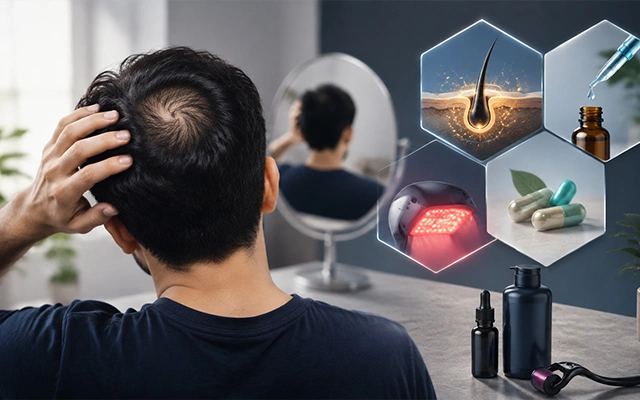
You started using minoxidil with the hope of seeing thicker, healthier hair, but months have passed without the results you expected. This can feel frustrating, especially when hair thinning continues despite consistent application. Many people reach this stage and begin exploring a more effective hair regrowth treatment that focuses on improving follicle activity rather than only maintaining existing hair.
While minoxidil can help some individuals, it may not address every factor behind hair loss. Understanding why your progress has slowed can help you choose the right approach to restore hair density and build confidence.
Why Minoxidil Stops Working After a While
Minoxidil is one of the most commonly used topical treatments for hair loss. It works by improving blood circulation around hair follicles and extending the growth phase of the hair cycle. For many people, it can reduce hair loss and support some amount of regrowth during the initial months.
However, some individuals experience a stage where they notice that minoxidil is no longer working or producing visible improvement.
There are several reasons why this may happen:
- Minoxidil mainly supports follicle stimulation but does not directly correct the underlying cause of hair thinning.
- If hair follicles continue to be affected by hormonal factors, improvement may slow down over time.
- Advanced hair loss may require additional therapies that work deeper at the follicular level.
- Inconsistent usage can also affect results because hair growth requires continuous support.
Remember, hair loss is complex; a treatment that works well in the early stages may not provide the same level of improvement when the condition progresses.
Is DHT the Real Reason Behind Your Hair Thinning?

For many people experiencing pattern hair loss, hormones play a major role. One of the key factors involved is DHT (dihydrotestosterone), a hormone linked with gradual follicle shrinking in genetically sensitive individuals.
The relationship between DHT and hair thinning is especially noticeable in cases of male and female pattern hair loss. When DHT affects susceptible follicles, they may become smaller over time. This process causes:
- Thinner hair strands
- Shorter growth cycles
- Increased scalp visibility
- Reduced overall hair density
Minoxidil may help improve follicle activity, but it does not directly target DHT-related sensitivity. This is why some people notice temporary improvement but later feel their progress has slowed.
A proper evaluation of your hair loss pattern, scalp condition, and follicle health can help identify whether hormonal factors are contributing to your concerns.
When Topical Treatments Aren’t Enough Anymore
If you have been using topical products for months without noticeable improvement, it may be time to consider other options. Continuing the same routine without understanding why your hair is not responding can delay effective care.
Our hair fall treatment focuses on identifying the reason behind hair loss instead of offering a one-size-fits-all solution. Factors such as genetics, nutritional deficiencies, scalp inflammation, stress, and hormonal changes can all influence hair growth.
Advanced treatments aim to support inactive or weakened follicles, improve scalp conditions, and create an environment where healthier hair growth can occur.
What Actually Works When Minoxidil Plateaus
When minoxidil reaches its limit, many patients look for treatments that support natural follicle repair and regeneration. This is where regenerative therapies like PRP have gained attention.
PRP Hair Loss Treatment — How It’s Different From Minoxidil
Unlike topical solutions that are applied externally, PRP works by using your body's own growth factors. During this procedure, a small amount of your blood is processed to concentrate platelets, which contain healing and growth-supporting components. These are then introduced into targeted areas of the scalp.
At our clinic, we offer PRP Hair Loss Treatment in Kolkata for individuals looking for a non-surgical approach to improve hair density and strengthen weakened follicles. We focus on creating personalised treatment plans based on your hair loss pattern, scalp condition, and growth goals.
PRP does not simply cover the symptoms of hair loss. It aims to support follicle function by improving the scalp environment and encouraging healthier growth activity.
PRP vs Minoxidil — Which One Actually Regrows Hair?
The choice between PRP and minoxidil depends on your individual condition. Both treatments work differently.
Minoxidil:
- Applied directly to the scalp
- Helps stimulate existing follicles
- Requires regular long-term use
- May not address deeper causes of hair thinning
PRP:
- Uses concentrated growth factors from your own blood
- Targets weakened follicles directly
- Supports natural repair processes
- Can be combined with other hair restoration methods
When comparing PRP vs minoxidil for hair loss, it is not always about replacing one with another. Some patients may benefit from combining approaches under professional guidance.
The right treatment depends on factors such as the stage of hair loss, follicle condition, age, and overall scalp health.
Who Should Consider Non-Surgical Hair Loss Treatment
A non-surgical hair loss treatment can be suitable for people who want to improve hair growth without undergoing invasive procedures.
It may be considered by:
- Men experiencing early or moderate pattern hair loss
- Women noticing gradual thinning or reduced volume
- Individuals with weakened hair follicles
- People who have not achieved desired results with topical treatments
A customised approach is important because hair loss treatment for men and women may differ depending on hormonal influences, lifestyle factors, and the pattern of thinning.
What to Expect From an Advanced Hair Loss Therapy Plan
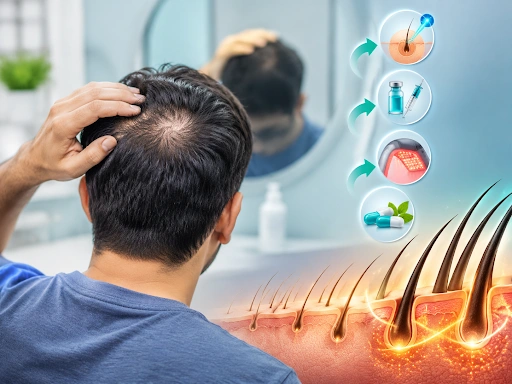
An effective hair restoration journey involves more than just treating visible hair fall. A complete plan evaluates your scalp and follicle health.
An advanced hair loss therapy plan may include:
- Detailed scalp assessment
- Understanding the pattern and cause of hair thinning
- Improving scalp health and hair thinning concerns
- Supporting follicle strength
- Regular monitoring of progress
Healthy hair growth depends on a healthy scalp environment. Addressing scalp issues, maintaining proper nutrition, and following a consistent care routine can improve the chances of better outcomes.
Why PRP Treatment Succeeds Where Minoxidil Falls Short
PRP Hair Loss Treatment can be a valuable option for people who have reached a stage where minoxidil alone is no longer giving satisfactory results. At our clinic, we use PRP therapy to support natural hair growth by delivering concentrated growth factors directly to areas where follicles need additional stimulation.
The main advantage of PRP is that it works with your body's own healing mechanisms. Instead of only maintaining hair externally, it focuses on improving the environment around hair follicles.
However, results depend on several factors, including the severity of hair loss, follicle health, consistency of sessions, and individual response. A consultation helps determine whether PRP is suitable for your specific condition.
Book a PRP Hair Loss Consultation at Elation
If you have been struggling with continuous hair thinning despite months of minoxidil use, it may be time to explore a personalised solution. At our clinic, we evaluate your hair concerns and recommend treatments based on your scalp condition and hair growth goals.
Book a consultation today.
Frequently Asked Questions
1. How long should you use minoxidil before deciding it's not working?
Most people need to use minoxidil consistently for several months before judging its effectiveness. If there is no improvement after a reasonable period, a professional evaluation can help identify whether another treatment approach may be needed.
2. Can PRP be combined with minoxidil for better hair regrowth results?
Yes, PRP and minoxidil can sometimes be combined as part of a customised hair restoration plan. Your doctor can recommend whether using both treatments is suitable for your condition.
3. Is PRP hair loss treatment painful or does it need downtime?
PRP is a minimally invasive procedure. Some people may experience mild discomfort or temporary redness after treatment, but most can return to regular activities quickly.
4. How many PRP sessions are typically needed to see visible hair growth?
The number of sessions varies depending on the individual's hair loss condition and treatment goals. Many patients require multiple sessions followed by maintenance recommendations.
5. Is PRP effective for both male and female pattern hair loss?
PRP may benefit both men and women with pattern hair loss, especially when treatment starts before follicles become permanently inactive. A consultation helps determine suitability.